
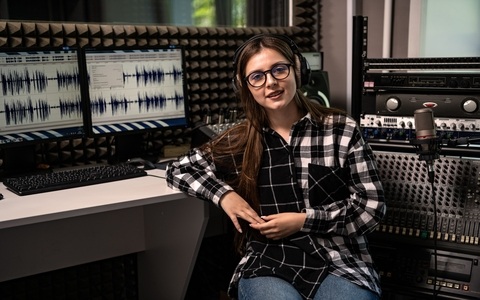
 Studying music production and technology is an exciting and creative endeavor. Students become adept at navigating a professional world that is constantly evolving, requiring a broad knowledge of the most cutting-edge software and equipment. When choosing a program in music production and technology consider whether you’re more interested in building and creating the tools of music production and technology or using those tools to help record and produce artists. While most schools offer the opportunity to study both, knowing your aptitude and preference will help you choose the program that’s right for you. This post will guide you through the ins and outs of the following top programs in Music Production & Technology:
- Berklee College of Music: BM – Music Production and Engineering
- Carnegie Mellon School of Music: BS – Music & Technology
- Johns Hopkins University – Peabody Institute: BM – Recording Arts
- New York University Clive Davis Institute of Recorded Music: BFA – Recorded Music
- New York University Steinhardt School of Culture, Education, and Human Development: BM in Music Technology
- University of Southern California – Thornton School of Music: BM – Music Technology
- University of Miami’s Frost School of Music: BS – Music Engineering Technology or BM in Media Scoring and Production
As we consider what each of the top programs offer, we’ll also help you understand what you’ll need to thrive in the professional landscape of music production and technology. Be sure to check out our list of Other Top Programs of Note below, where you’ll find many more exceptional programs.
Curriculum
Commonalities and Differences Amongst Top Programs
With the exception of NYU’s Clive Davis Institute of Recorded Music, which offers a BFA, the programs we feature here offer a Bachelor of Music or a Bachelor of Science. This is an important distinction in most music production and technology programs and is evidence of why it’s wise to have an idea of what you’d like to pursue professionally after graduating in tandem with your personal passions as a student.
BS programs in Music and Technology, like at Carnegie Mellon, or in Music Engineering Technology at the University of Miami’s Frost School of Music, will focus heavily on engineering and/or computer science, catering to those music production students with a penchant for hardware, software and instrument design. Their core curriculum includes courses in calculus and physics and their major-specific courses include Electronic Devices and Analog Circuits, as at Carnegie Mellon, or Transducer Theory at Frost.
In contrast, BM programs in the fields of music production, engineering, and technology–like those at Berklee, NYU’s Steinhardt, USC’s Thornton School of Music, or Johns Hopkins in Recording Arts–have a core curriculum grounded in music theory, liberal arts, and humanities; as well as music performance and songwriting. Major-specific courses at these schools cover topics like Music Production for Records at Berklee, Concert Recording at Steinhardt, or Mixing Sound for Picture at Johns Hopkins.
Similarly, while most programs offer some introduction to the music industry, some programs emphasize it in their curriculum with courses like Berklee’s The Business of Music Production or Thornton’s Introduction to the Music Industry, or especially, NYU’s Clive Davis Institute’s How the Contemporary Music Business Works. Johns Hopkins offers a special Breakthrough Curriculum to all of its students that builds skills in entrepreneurial thinking and career development.
As you discern which type of degree and program you will thrive in, reflect on your career goals. Are you interested in designing synthesizers and other electronic instruments at a company like Korg or Kurzweil? If so, a BS would be a good fit for you. Or would you rather be the lead audio engineer at a major recording studio or a music producer working directly with artists? If yes, then a BM would likely be your degree of choice. Both types of degrees will guide you into the music production and technology field, but with a different emphasis. Essentially, ask yourself: are you more interested in the science of sound or in producing music? Keep these questions in mind as we move forward and learn more about each of these fantastic programs.
Unique Offerings of Top Programs
Given the many concentrations within the study of music production and technology, from live sound design to recording and mixing to instrument design, each program is going to offer its own approach to learning as well as a variety of paths of study. NYU’s Steinhardt, for example, offers a five-year, dual Bachelor and Master of Music in Music Technology, and Frost offers a BM in Media Scoring and Production. Berklee has a course that emphasizes entrepreneurial music production called The Business of Independent Music Production, while Carnegie Mellon has a STEM focus with courses like Mathematical Foundations of Electrical Engineering or Introduction to Computer Music. Each program offers a variety of courses and degree pathways into the field of music production and technology. Consider which of these most align with your career goals.
If you are interested in the production side of the degree, consider the type of music you want to record as well as the available facilities and equipment. Your recording opportunities will hinge on the unique music scene at your school as well as the other departments you can collaborate with as you learn recording techniques. Thornton’s music production students, for example, often work with USC’s school communications and journalism, collaborating with student journalists on podcast production, and with the school of engineering on sound design for video games.
Frost focuses mainly on classical music, while Johns Hopkins offers Hip Hop as an area of study (it’s also known for its New Media: Film and Game Scoring degree). Crossing genres, Berklee’s 1,200 seat performance center gives students the opportunity to learn live recording techniques for jazz, folk, pop, and classical acts, and Carnegie Mellon’s live theatrical sound design program works in tandem with their renowned musical theater program. Often the music scene of your program will influence what kind of music you end up producing once you graduate.
Both of NYU’s programs (Clive Davis Institute and Steinhardt) give students the opportunity to immerse themselves in the international music scene and deepen their knowledge of the global industry through their “study away” requirement. For one semester, usually during junior year, students will attend one of NYU’s 24 satellite campuses or Clive Davis’s own satellite campus in Berlin.
And while Berklee also offers study abroad options, one unique aspect of its program is its emphasis on collaboration within the business side of music production, preparing students to work successfully with key stakeholders like major music executives, film directors or famous musicians, as will often be expected of them in the professional world. For students interested in audio post-production for film and television, Frost is known for its Media Scoring and Production Program.
There are many approaches to teaching and opportunities for learning music production and technology, so it’s important that you take your time exploring each program’s offerings and weighing which resonate most with your future aspirations.
Facilities
If you’re hoping to enter the field of music production and technology, you probably already have an interest in music equipment, software, or the general gear associated with recording, mixing, or creating instruments. As you consider each program, remember that the equipment you gain experience on as a student will impact which jobs you are eligible for when you enter the professional world. For example, if you are interested in a career in post-production for film, a school like Steinhardt or Thornton would be a great place to learn since you can practice mixing on a digital console like the Avid S6 in rooms specifically designed for 5.1 surround sound (standard for movie theaters) and Dolby Atmos (with 50+ speakers placed around the room).
However, if you’re more interested in producing records, learning to work on analog equipment is important. Berklee, Johns Hopkins, and Clive Davis Institute each own a Neve console (a beloved piece of analog equipment amongst record producers the world over), which allows students to learn a valuable skill that they wouldn’t otherwise have access to prior to working in professional studios. Where Berklee, Johns Hopkins, and Clive Davis Institute offer students equal access to digital and analog equipment and instruction, most schools emphasize digital, like at Frost School of Music’s L. Austin Weeks Recording Studio. However, remember that Frost, like Carnegie Mellon, offers a Bachelor of Science, and will focus more on theory, engineering, and design–like that of instruments or software. Johns Hopkins, Berklee and NYU rival one another for the best student access to high-end digital and analog equipment for music production.
Location & Culture
Location
Any major city will provide you with a strong network of support and job opportunities as well as the chance to practice recording and producing music. Miami, where Frost School of Music is located, will have a wealth of Latin culture and music. Johns Hopkins’ location just north of downtown Baltimore offers the experience of an idyllic campus in a large and vibrant city with a storied history of hip hop. Similarly, Pittsburgh, where Carnegie Mellon is located, has its roots in punk and jazz–it’s also been cited as one of the top ten best cities to find a job. Berklee’s name carries weight in any city, but especially in its hometown of Boston. However, if you are ultimately hoping to work in New York City or Los Angeles, we suggest you look at schools located in those cities, like NYU’s Steinhardt and Clive Davis Institute in New York or USC’s Thornton School of Music in Los Angeles. These programs are known for their deep ties to the music industry and much of that is owed to their locations.
Culture
Like location, the personality, or culture, of a program is an important factor in deciding which school is the best fit for you. Berklee is well-known for its close-knit student-body and lasting alumni relationships, and its music production program only admits around 80-85 students per year. Thornton, while a smaller program than Berklee with only around 10 students admitted each year, has an exceptionally collaborative atmosphere. Both programs, as well as NYU’s Clive Davis Institute, are known for their practical approach to education, presenting students with real-world scenarios and prioritizing industry connections. Between the two programs at NYU, Steinhardt is considered the more academic in atmosphere, offering a more all-encompassing audio production education, whereas the Clive Davis Institute emphasizes music production geared towards making records.
Frost School of Music, while dedicated to its students’ professional careers post-graduation (and having produced many Grammy-winners), is part of the larger University of Miami, which boasts a lively Greek Life and an active party scene. While introverts can certainly find their place in a large school, it might not be the best choice for those students who prefer a quiet and calm study environment. Carnegie Mellon’s atmosphere, on the other hand, has been labeled intellectual and quirky, whereas the culture at Johns Hopkins is considered “nerdy,” motivated, and at times competitive. However, while it could be tempting to take our word for it, the best way to find out if a program or university is the right fit for you is to check it out yourself, in person!
Career
Internships, On-Campus Opportunities & Professional Networking
Internships and on-campus organizations are the connective tissue of any successful degree program, particularly in the field of music production and technology, which relies heavily on industry connections. Clive Davis Institute, Steinhardt, and Johns Hopkins’s Recording Arts specialization all require students to participate in an industry internship, while Berklee and Thornton don’t have an internship requirement, but do have active internship programs that help facilitate placement for motivated students. Berklee’s Wadhams Production Scholars program even takes several faculty-nominated students in the music production and engineering program on a trip each year to record in studios all over the world with the industry’s top producers and engineers.
At Frost, though internships aren’t required, most of their students complete more than one before graduation. They also have several on-campus organizations dedicated to the music industry, including Music Industry Association (MIA) and GRAMMY-U that help students connect and prepare for careers in the music industry. At Carnegie Mellon, students can participate in Independent Musicians Organizations (IMO) and the University will also assist its students with funding for unpaid or underpaid internship opportunities. Notably, Johns Hopkins’ required industry work study program is paid.
Each school will have its own array of opportunities for gaining experience outside of the classroom and for building your network, like Berklee and NYU’s chapters of the Audio Engineering Society. Johns Hopkins’ Blue Jay Takeaway student group works alongside their student-run radio station to document and record music being performed all over campus. And at Carnegie Mellon students can learn how to produce live sound and track professional recordings through AB Tech, the student-run music technology group. Pay close attention to which activities, organizations, and industry opportunities each program offers that will set you up for success post-graduation.
This post illustrates the breadth of the field of music production and technology. Its career opportunities are varied and it is one of the most employable specializations in the field of music. Each school we’ve featured here and listed below will provide you with the skills necessary to succeed in any number of careers whether that’s an algorithmic software designer at Spotify, a record producer, a music editor for film and television, or an instrument designer. Be sure to conduct your own research as well, then weigh each program against your future desires to find the best fit. In our next post, we’ll take an in-depth look at the admissions process for top undergraduate music programs!
Other Top Programs of Note
- Belmont University School of Music
- Drexel University
- Indiana University Jacobs School of Music
- Middle Tennessee State University School of Music
- SUNY Purchase Conservatory of Music
- University of Massachusetts – Lowell
- University of Michigan School of Music, Theatre, and Dance
Feel free to set up a complimentary consultation to learn about our admissions consulting services. Whatever your question, Collegiate Gateway is happy to help!


